The Gin Creek blog
Preparing Your Home for a Move While Planning Your New Décor
Preparing a house for a move and planning the décor of the next one are usually treated as two jobs done months apart. They go faster as one job. The pieces you decide to keep are the start of the new décor, and the rooms you are moving into decide what is worth packing at all.
A plan made in that order keeps the last weeks calmer too. The house you are leaving stays presentable while it sells, the boxes hold what the new rooms can use, and the first week in the new place goes to arranging furniture instead of sorting through the wrong things.
Measure the new rooms before you pack the first box
Nothing about the new décor is reliable until you know what the rooms will hold. Walk the empty house with a tape measure and write down the length of every wall, the height of the windows, where the outlets and radiators sit, and the width of the narrowest doorway a sofa has to pass through.
Photograph each room from the doorway in daylight. A phone photo taken at the hour you will actually use the room tells you more about light than a listing photo does, and those angles answer questions later that a floor plan cannot.
Mark where the large pieces will stand before anything is wrapped. A dresser that fit the old bedroom may be too deep for the new one, and one dining table can decide whether a room works at all. Those calls belong to this stage, not to moving day.
Plan the new décor around what you already own
Most of a new room is already in the old house. Walk through your own rooms with the new floor plan in hand and list the pieces that will travel: the shelf that holds books and a bowl, the canisters beside the stove, the lamp that gives a corner its evening light. That list keeps the budget for what a new house genuinely needs, such as a rug that fits a larger room or a curtain run long enough for taller windows.
Choose the palette before you buy anything
Pick three finishes that already appear in the pieces you are keeping, then hold new purchases to them. Warm white ceramics, natural wood, and blackened iron carry a Southern farmhouse room without a matching set, and they survive a change of address better than a color scheme built around one wall.
A wall piece can do the work of a shelf in a room where floor space is tight. Hanging canning jars hold cuttings and a candle, need one hook, and travel without a box.
Plan the walls, not only the floor
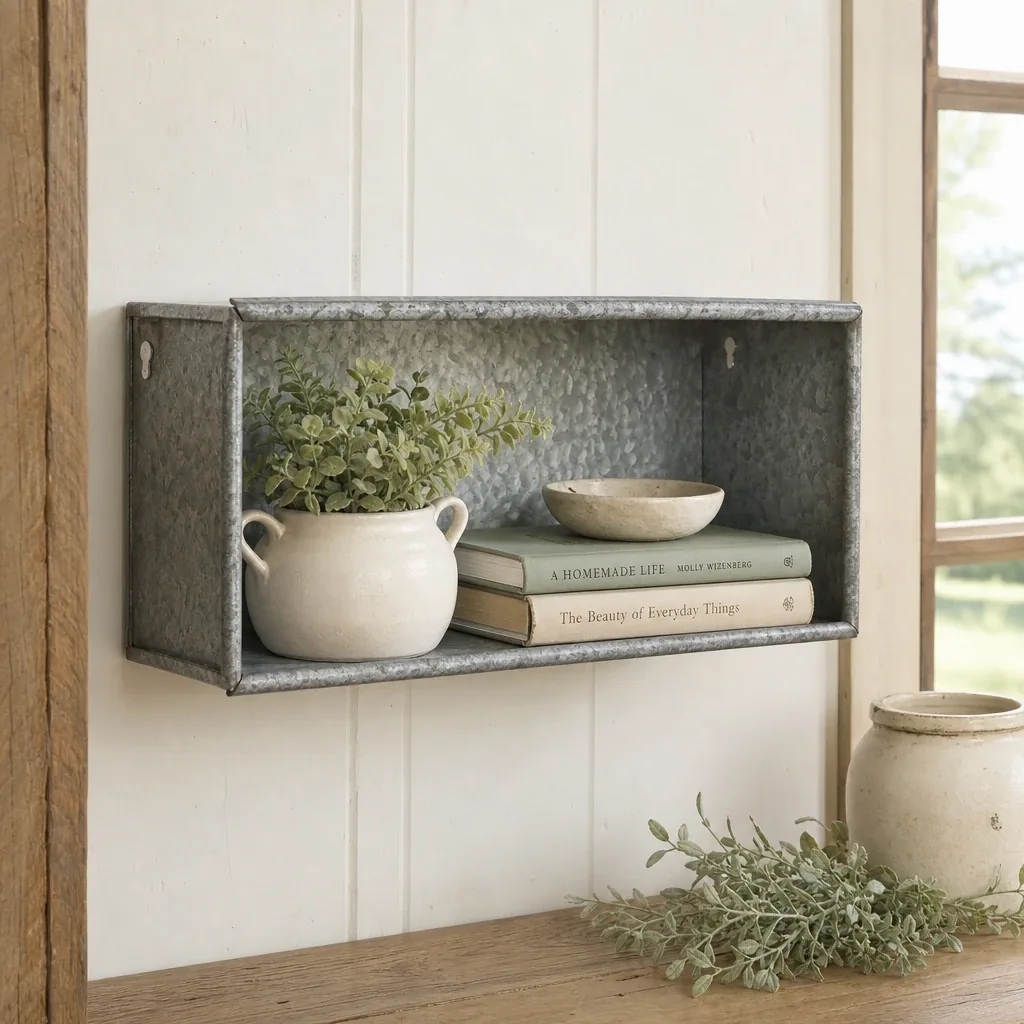
Wall space is the part of a new house that surprises people, because tall rooms and long hallways need pieces at a different scale. Decide which wall in each room stays bare, which one takes the largest piece, and which one holds the small things. A shelf that carries a pot, a few books, and a dish in one line is easier to place in a room with good light than a dozen small frames.
Stage the house you are leaving with the pieces that stay
A house that is for sale and a house being packed can look the same to a buyer, which is why the staging plan and the packing plan are one plan. Pack the extras first and leave the anchors: the tray on the counter, the bowl on the table, the lamp in the corner. Buyers read those few pieces as a home that is cared for.
Pack the extras, not the anchors
Start with the rooms nobody photographs: the garage shelf, the closet floor, the cabinet above the refrigerator. Clear the surfaces in the rooms that get shown, and put away anything with no purpose in a photograph of that room. Keep one drawer of daily things in the kitchen and pack the rest, and keep the cleaning supplies in one basket that rides in the car.
Small repairs are worth finishing before the packing gets serious: the loose hinge, the scuffed baseboard, the burned-out bulb in the hallway. A shelf hung straight covers a patched wall better than a picture rail, and it comes down in a minute when the truck arrives.
Pack by the new floor plan, not the old rooms
Label each box with the room it is going to, not the room it came from, then add the zone inside that room: coffee and mugs, plates and bowls, the drawer of utensils. A box marked for the kitchen with the counter named on it gets unpacked on the first evening. A box marked kitchen alone goes to the garage and stays there.
Full moving and packing services take the glass and stoneware off your hands in the last week, when the house is half packed and every spare hour goes to the sale. If the packing is your own, wrap plates on edge, box the lampshades separately, and keep the hardware from every disassembled piece in a labeled bag taped to the frame. The same care applies to the décor that is going straight back on a wall, which is the part protecting kitchen and home décor during a move covers in more detail.
Bring in help for the parts that set the timeline
A move that starts with a walkthrough runs on fewer surprises. Invite professional movers to look at the stairwell, the driveway, and the pieces that come apart, and they can tell you how long the load takes before the packing is finished. That number decides whether the closing date and the move date line up.
For a local move, a residential moving company that also handles packing, furniture assembly, and the awkward items gives you one schedule instead of three. Ask what the crew expects to find on arrival, and pass on the floor plan you drew for the new décor, so the furniture lands where the plan says rather than along the nearest wall.
Prepare the House and the New Décor With Idaho Premier Moving
For the move between the two plans, Idaho Premier Moving is at 262 E Lake Rim Ln, Boise, ID 83716, and the phone number is (208) 509-9194. The Google Maps listing shows the office on East Lake Rim Lane.
The Boise team handles local and long distance moving, residential and commercial moves, apartment moves, packing, moving labor, senior moves, pool table moves, and furniture moving.
The first week in the new house
Unpack the room the house runs on first, then the room you sit in, and leave the rest for the weekend. Décor planned from measurements goes up quickly, because every piece already has a wall and the boxes were labeled for the room they were meant for.
Two plans made together cost one set of evenings. Measure the new rooms, choose the palette from what you own, stage the old house with the anchors, and pack by the floor plan, and both houses will be ready sooner.